
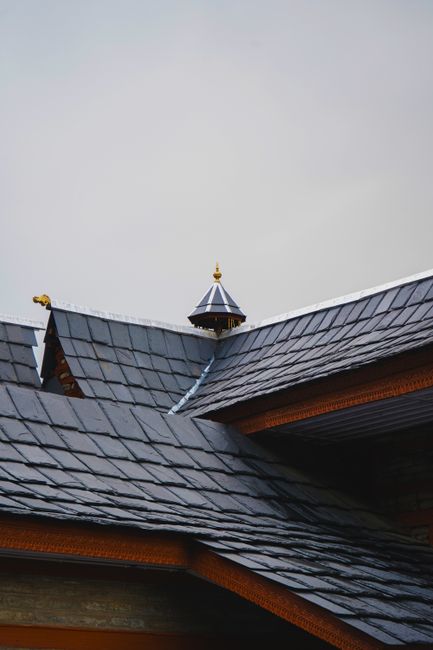
Roofing technology is changing in ways that are not always obvious from the ground. Newer systems are designed to manage snow, ice, wind, heat, moisture, stormwater, and long-term maintenance more effectively than many older assemblies.
For homeowners in Fort Edward, NY, the most useful innovations are not necessarily the most futuristic. Improvements in underlayment, insulation, ventilation, impact resistance, roof monitoring, and material performance can have a greater practical effect than highly specialized products.
What roofing innovations matter most in a cold, snowy climate?
The most valuable advances for local homes are technologies that control moisture, reduce heat loss, and help the roof handle repeated freeze-thaw cycles. A roof must do more than shed rain. It must also manage snow loads, melting snow, ice formation, attic humidity, and water that can refreeze near the eaves.
Modern roof assemblies may include:
- More durable ice-barrier membranes along eaves, valleys, and other vulnerable areas
- Improved synthetic underlayments that resist tearing and moisture intrusion
- Continuous insulation that reduces cold spots across the roof
- Better air-sealing details around chimneys, plumbing vents, skylights, and attic openings
- Ridge-and-soffit ventilation systems designed to support consistent airflow
- Mechanically fastened materials and edge details that improve wind resistance
These components work together. A high-quality shingle installed over a poorly sealed or poorly ventilated roof may still experience moisture problems.
How do modern roofs help prevent ice dams?
Modern ice-dam prevention focuses on controlling heat movement and air leakage rather than relying on one product. Ice dams form when heat from the living space warms parts of the roof, melts snow, and allows the resulting water to freeze at colder eaves.
Improved roof technology addresses this problem through several layers:
1. Air sealing: Warm indoor air should not leak into the attic or roof cavity.
2. Insulation: Adequate insulation helps keep the roof deck closer to the outdoor temperature.
3. Ventilation: Properly designed airflow can remove moisture and help maintain more even roof temperatures.
4. Water-resistant barriers: Membranes near eaves provide an additional line of defense if water backs up behind ice.
Roof ventilation is not a substitute for insulation or air sealing. Adding a roof vent without correcting major air leaks can leave the underlying problem unresolved. In some homes, especially those with cathedral ceilings or complicated additions, a sealed roof assembly may be more appropriate than a conventional vented attic. The correct approach depends on the roof design and the location of the insulation and air-control layers.
Are impact-resistant shingles useful in this area?
Impact-resistant roofing materials are designed to better withstand hail and airborne debris. They may be identified by testing classifications such as UL 2218 or FM 4473, although a laboratory rating does not guarantee that a roof will remain free of dents or damage during every storm.
Impact-resistant shingles typically use modified mats, polymer reinforcement, or other construction changes that help reduce cracking and puncturing. Some synthetic composite roofing products are also engineered to imitate slate or wood while reducing the risk of splitting.
A useful distinction is the difference between cosmetic damage and functional damage. A metal panel may dent without leaking, while a damaged shingle may lose granules, crack, or allow water to reach the underlayment. Roof performance depends on the full assembly, including fasteners, flashing, decking, and edge installation.
Wind ratings should also be read carefully. A product’s rating is based on specific testing conditions and proper installation. Aging, repeated temperature changes, previous storm damage, and weakened sealant can reduce performance over time.
What new roofing materials are becoming more common?
Several material categories are receiving increased attention:
Advanced asphalt shingles
Modern asphalt shingles may include stronger fiberglass reinforcement, improved sealant strips, algae-resistant granules, reflective surfaces, and impact-resistance features. Some are designed to maintain flexibility during temperature changes, which can help reduce cracking.
Metal roofing systems
Standing-seam and other mechanically fastened metal systems can provide strong resistance to wind, fire, and moisture. Their performance depends heavily on panel attachment, seams, penetrations, snow-slide considerations, and compatibility with the roof structure.
Metal roofs are not maintenance-free. Fasteners, flashing, sealants, coatings, and areas around chimneys or roof penetrations still require inspection. Snow guards may also be considered where sliding snow could endanger people, damage lower roofs, or block entrances.
Synthetic composite roofing
Composite materials can offer the appearance of natural slate or wood with less risk of splitting, but their long-term performance varies by product formulation and installation quality. Weight, fire classification, impact testing, and cold-weather behavior should all be reviewed before use.
Reflective and cool-roof surfaces
Reflective roofing is more valuable in buildings with significant summer cooling demand. A reflective surface can reduce solar heat gain, but the benefit depends on roof color, insulation levels, attic design, and the building’s heating and cooling patterns. In a cold-weather region, winter heat loss is often a more immediate concern for a typical residence.
Can technology make roofs easier to monitor?
Yes. Roof inspections are increasingly supported by digital tools, including high-resolution photography, infrared scanning, moisture meters, aerial imaging, and computerized inspection records.
Infrared tools may help identify unusual temperature patterns associated with wet insulation or missing insulation, but they do not directly “see” every leak. Results can be affected by weather, roof materials, sunlight, and the timing of the inspection.
Moisture sensors can be useful on low-slope roofs or in buildings with recurring leakage. Some commercial systems include embedded sensors that track moisture beneath a membrane. Residential systems are generally less sophisticated, but smart attic monitors can measure temperature and humidity and provide alerts when conditions become unusually damp or cold.
These technologies support inspection; they do not replace visual evaluation. A sensor may identify a change in conditions without explaining whether the cause is a roof leak, condensation, ventilation problem, plumbing issue, or indoor humidity.
What role do solar roofing and green roofs play?
Solar panels are an energy technology installed above or integrated with a roof, but the roof’s age and condition matter. Installing panels over a roof nearing the end of its service life can complicate future repairs. Attachment points must be carefully flashed, and snow accumulation, access, wiring, and structural loading should be considered.
Solar shingles combine roofing and photovoltaic functions, though they may have higher installation complexity and more limited repair options than conventional roofing paired with separate panels.
Green roofs use waterproofing layers, drainage components, growing media, and vegetation. They can reduce stormwater runoff and moderate roof temperatures, but they also add weight and require structural capacity, drainage planning, maintenance, and plant selection suited to seasonal conditions. They are generally more practical on appropriately designed low-slope buildings than on ordinary steep residential roofs.
How should homeowners evaluate a new roofing technology?
The most useful questions are practical:
- Is the product tested for wind, fire, impact, and moisture performance?
- Does it comply with applicable building requirements?
- Is it suitable for the roof’s slope and structural design?
- How will it handle snow accumulation and freeze-thaw cycles?
- Are replacement parts or compatible repairs likely to remain available?
- Does the installation method protect flashing, valleys, eaves, and penetrations?
- What maintenance is required after installation?
- Does the warranty depend on special installation conditions?
A newer material is not automatically a better choice. In many homes, the greatest improvement comes from correcting air leakage, upgrading insulation, improving flashing, and creating a continuous water-shedding system.
For area households, roofing innovation is best understood as a system rather than a single product. The roof covering, underlayment, ventilation, insulation, drainage, fasteners, flashing, and structure must all work together. That systems approach is especially useful where roofs face snow, ice, wind, heavy rain, and repeated seasonal temperature changes.
