
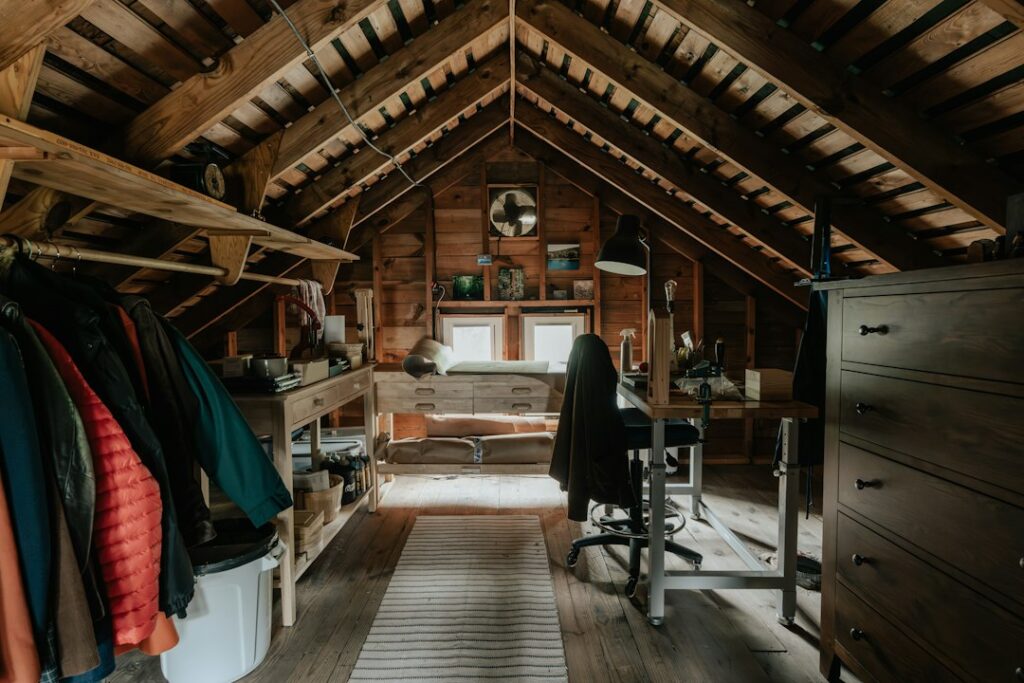
Holiday decorations are usually stored for most of the year, and the place chosen for storage can affect roof condition, attic ventilation, and household safety. In Fort Edward, NY, seasonal snow, ice, freeze-thaw cycles, and damp spring conditions make it especially useful to keep decorations off the roof itself and away from areas where moisture can collect.
Should holiday decorations ever be stored on a roof?
No. Roof surfaces, roof valleys, gutters, and low-slope sections are not suitable storage areas for decorations, containers, ladders, or seasonal equipment.
Even lightweight items can create problems when they remain outside for months. Decorations may:
- Scratch or loosen roofing materials
- Block drainage paths
- Trap leaves, snow, or ice
- Damage flashing around chimneys, vents, and skylights
- Blow into gutters or downspouts
- Create trip hazards during snow removal or roof inspection
A roof is designed to shed water and snow, not to support scattered household storage. Plastic tubs, metal frames, wooden decorations, and artificial wreaths can rub against roofing surfaces as wind moves them. A small amount of abrasion may become more serious after repeated exposure to freezing temperatures and moisture.
Decorations should be stored indoors in a dry location, preferably on a stable shelf or platform that does not interfere with attic airflow.
Is the attic a safe place for holiday decorations?
An attic can be appropriate, but only if the storage arrangement protects both the decorations and the roof system. Items should not be placed directly on insulation, pressed against roof decking, or positioned over recessed lights, electrical equipment, or ventilation openings.
Before using attic space, check for these conditions:
- The attic floor is strong enough to support storage containers.
- Insulation is not compressed under boxes.
- Soffit vents remain open and unobstructed.
- Ridge, gable, or other ventilation paths are not blocked.
- Roofing nails or damp roof sheathing are not exposed.
- There is safe lighting and a clear walking path.
- Boxes are kept away from chimneys, flues, and heat-producing equipment.
Roof ventilation helps control moisture and summer heat. If decorations are stacked along the eaves, they can restrict air movement from soffit vents. In winter, poor ventilation can contribute to condensation under the roof deck, while warm attic areas can increase the risk of uneven snow melting and ice formation along eaves.
Attic storage should be limited to areas intended for walking and storage. Stepping between ceiling joists can damage drywall below or cause a fall.
How should decorations be packed to prevent roof-related damage?
Use sturdy, labeled containers with secure lids, and keep decorations dry before packing them away. Moisture trapped inside a container can lead to mildew, corrosion, and unpleasant odors during storage.
For a safer arrangement:
- Use containers that can be lifted without twisting or overreaching.
- Avoid oversized boxes that are difficult to move through an attic opening.
- Place heavier containers on the bottom.
- Keep fragile ornaments in smaller, well-padded boxes.
- Store extension cords loosely rather than tightly knotting them.
- Remove batteries from lighted decorations and electronic items.
- Let artificial greenery dry fully before packing.
- Label containers by season or room to reduce unnecessary handling.
Cardboard boxes may absorb moisture in an attic, garage, basement, or shed. Plastic containers generally provide better protection, but they should not be treated as completely waterproof. A damaged lid or condensation inside a sealed container can still expose decorations to moisture.
Do not lean long decoration pieces against rafters, roof sheathing, or attic vents. They can shift, fall, or block inspection access.
Where should outdoor lights and decorations be stored?
Outdoor decorations should be cleaned and dried before storage, then kept in a protected indoor area whenever possible. Garages, sheds, and unheated storage areas can work, but they should be reasonably dry and protected from roof leaks, flooding, rodents, and extreme temperature swings.
Inspect outdoor lighting before packing it away. Look for:
- Cracked insulation
- Frayed wires
- Loose sockets
- Corroded plugs
- Missing seals
- Bent clips or fasteners
- Damage caused by squirrels or other animals

Do not store lights while they are wet or covered with mud, salt, or deicing residue. Moisture and residue can accelerate corrosion. Separate cords from sharp-edged decorations, and avoid placing heavy objects on top of electrical wiring.
Outdoor clips and fasteners should be stored with the lights they fit. Improvised nails, staples, and metal hooks can damage both wiring and roofing materials if reused the following season.
Can decorations be stored in gutters or near downspouts?
No. Gutters and downspouts must remain clear, especially in a region that receives snow, ice, and fall leaf buildup. Storing decorations in or beside these drainage components can deform gutters, block water flow, or cause water to spill against fascia boards and exterior walls.
After holiday decorations are removed, inspect nearby gutters for:
- Loose or sagging sections
- Cracks or separated joints
- Packed leaves and needles
- Ice-related distortion
- Downspout blockages
- Water stains on fascia or soffits
Do not use gutters as temporary shelves while taking down lights. Even a short-term load can bend the gutter edge or pull fasteners from the fascia.
How can roof damage be avoided while putting decorations away?
The removal process can be harder on a roof than the installation. Avoid dragging light strands, clips, inflatables, or rigid decorations across shingles. Pulling upward or sideways can dislodge granules, lift tabs, or damage flashing.
Use these precautions:
- Remove decorations during dry, calm weather.
- Use a properly positioned ladder on firm, level ground.
- Keep ladder sections away from gutters and roof edges.
- Never walk on an icy or snow-covered roof.
- Do not pull cords from the ground if they are caught on roof fixtures.
- Remove clips individually instead of twisting them loose.
- Keep tools and containers off the roof surface.
- Check for loose materials after removal.
If snow or ice is present, waiting for safer conditions is preferable to rushing the job. Roof surfaces can remain slippery even when they appear only lightly frosted.
What should be checked before storing decorations in the attic?
A quick inspection can identify roof problems before they become hidden behind boxes. Look for water stains, damp insulation, musty odors, mold-like growth, daylight through the roof deck, or rust around nails and metal components.
Pay close attention after heavy rain, snow, or a rapid thaw. In Fort Edward, freeze-thaw conditions can expose weaknesses around flashing, vents, chimneys, and roof edges. Any storage area that shows active moisture should not be used until the source has been identified and corrected.
Keep a clear path to roof vents, electrical equipment, and inspection areas. Decorations should be easy to move without climbing over boxes or stepping on unstable surfaces. Safe storage is not only about protecting holiday items; it also preserves access to the roof system when maintenance or inspection is necessary.
What is the simplest storage arrangement for most households?
For many homes, the safest arrangement is a dry indoor storage area with labeled plastic containers placed on a stable platform or shelving unit. Keep the containers away from roof edges, vents, heat sources, and areas with a history of leaks.
The goal is straightforward: store decorations where they stay dry, remain accessible, and do not interfere with drainage, ventilation, inspection, or safe movement. That approach protects both seasonal belongings and the roofing system above the home.
